
April 5, 2016
Insight into the IoT Analytics Maturity Process
By Exosite · 1 min read · From the team
As analytics strategies increase in sophistication from descriptive through prescriptive, the human input required to turn information into action can be dramatically reduced. In turn, this helps to minimize costs, enhance efficiency, improve results, and increase positive customer experience.
Once data collection standards have been defined, companies can begin progressing through the stages of analytics maturity. If done properly, this should decrease the level of human input required to take data and turn it into action. The following is a summary of these stages of maturity, including descriptive, diagnostic, predictive, and prescriptive analytics.
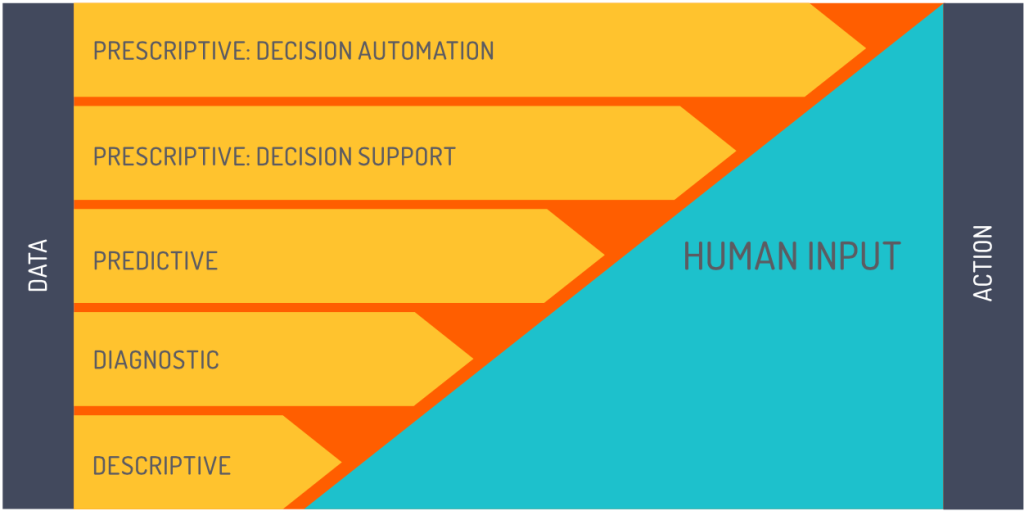
Stages of Maturity
Descriptive Analytics: What happened?
The first step in data analytics maturity is describing what is happening with the devices in an IoT deployment fleet.
Diagnostic Analytics: Why did it happen?
Digging deeper into descriptive analytics data, it is possible to see that failure or unexpected behavior of an IoT connected device is often linked to an anomaly.
Predictive Analytics: What will happen?
By using the diagnostic analytics data, it is possible to leverage those retroactive insights to begin projecting probable device behavior into the future.
Prescriptive Analytics: What should be done?
The final stage of analytics maturity involves deriving actionable items from predictions made in previous stages.